Time Emits Calendar Research Ancient Calendars of the Holy Bible |
|---|
Summary for timeemits video channel lists
Ages of Adam ministry powerpoint slides, videos and
transcripts. Teaching resources for Get_More_Time
articles are sharable through social media. Animations
support key zodiac calendar materials. Submit related
discussion and content material through Contact.
NEW Updated Videos Page More Subscribe http://www.youtube.com/user/timeemits
 |
NEW* GET
Calendar_Relativity_Script
for Only 99 cents from Paypal-Payloadz
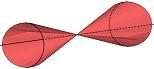
eStore, Video Soon!!! Relativity for calendar systems differentiates Absolute vs. Relative past. Absolute records in the common style of the era. Relative translates to modern timekeeping. Cones and triangles describe NOW moments ever widening as one approaches light speed. NOW traverses all eternity and a single thought at the speed of light is synonymous with infinity. Cart Item CRS 770 kb |
 V-n/a T-770 kb $ 0.99 |
 |
Get
Time_Splits_Adam_Seth_Video_&_Script for Only $ 1.98
from Paypal-Payloadz
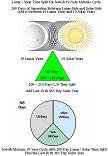
eStore Time Splits video explores moon and sun calendar differences used in early Genesis history. Voice over dialogue during 5 Lunar/Solar Time Split pictures is from Ages_of_Adam and Holy_of_Holies. Necessary study aid for understanding later Holy_of_Holies Venus Rounds 1-13 and associated 400-Year Baktun Cycles 1-13. Defines an original 360-day time split, the Jewish Calendar 19 year Metonic cycle, and lunar-solar adaptations for the Mayan Calendar Katun 20-Tun-year, and Baktun 400-Tun-year cycles. Circle diagrams showing primary and secondary ages refer to Genesis 5: Adam and Seth scriptures. Print the pictures for reference or teaching purposes. Cart Item TSASVT includes Downloads for Time_Splits_Adam_Seth.mp4 video 37 mb 19:24 and Time_Splits_Adam_Seth_Transcript.pdf 700 kb |
V-37 mb
T-700 kb $ 1.98 |
 |
Get Understand_Genesis_5_Ages_1
begins the Video Series 1-6 by timeemits. Ages_of_Adam
ordering information and resources are first detailed.
Time Splits are defined along with their use in
resolving the first character ages of Adam and
Seth. Some material is drawn from the Time_Splits_Adam_Seth
video. L/S Time Split for 360-Day-Tun-Year diagram and
Mayan adaptations lead to four ancient calendars. Cart Item Gn5A1VT includes
Video 1 download .mp4, 37 mb and transcript PDF
download 494 kb
from Paypal-Payloadz eStore for Only $ 1.98 |
V-37
mb
T-494 kb 1.98 |
 |
Get Understand_Genesis_5_Ages_2
The Antediluvian
Calendar gave rise to at least four different
forms of ancient calendar systems. Lunar/solar ages
shown by Genesis predicated the solar
Egyptian Calendar instrument frequently applied to
remote chronology. Judaism perpetuates the 19-year
lunar/solar calendar since the Creation. One day
bridges Jewish 19-year and Mayan 20-year l/s cycles. Cart Item Gn5A2VT includes
Video 2 download .mp4, 31 mb and transcript PDF
download 616 kb
from Paypal-Payloadz eStore for Only $ 1.98 |
V-31 mb T-616 kb 1.98 |
 |
Get Understand_Genesis_5_Ages_3
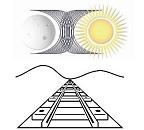
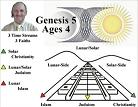
Primary 130-Year Age of Adam is
given by Genesis 5:3 when he begets his next
named son, Seth. Adam's Secondary Age is the first
800-year Generation Cycle 1. Mayan 400-year
Baktun Cycle 1 is shown with green text and
graphics. Railroad tracks analogy for solar and
lunar/solar time streams convey faiths. Third
video in the series. Cart Item Gn5A3VT includes
Video 3 download .mp4, 27 mb and transcript PDF
download 604 kb
from Paypal-Payloadz
eStore for Only $ 1.98
|
V-27 mb T-604 kb 1.98 |
 |
Get Understand_Genesis_5_Ages_4
Video & Script is from the fourth
video in the series, based upon works at timeemits.com
website. Videos and scripts are available resource
sets. Ages_of_Adam determines Antediluvian
Patriarch ages and background history as written
in Genesis 5. Video 4: Jesus & Solar
Time Stream tells about BCE to AD
calendar transition. Cart Item Gn5A4VT
includes Video 4 download .mp4, 29 mb and
transcript PDF download 590 kb
from Paypal-Payloadz eStore for Only $ 1.98 |
V-29 mb T-590 kb 1.98 |
 |
Get Understand_Genesis_5_Ages_5
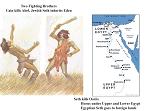
Video & Script tells a tale of two
Seths: the Jewish version from the Holy Bible and
the Egyptian version that stems from mythology.
Jewish Seth refers to the Adam's third born son
as written in early Genesis. Cain was the
eldest son who lost his first born birthright. Fifth video in the series.
Cart Item Gn5A5VT includes
Video 5 download .mp4, 32 mb and transcript PDF
download 567 kb
from Paypal-Payloadz eStore for Only $ 1.98 |
V-32 mb T-567 kb 1.98 |
 |
Get Understand_Genesis_5_Ages_6
Video_&_Script details
prehistory of Jewish Ethiopians and their 364-day-calendar-year.
Venus observers counted 8-solar-years
to mark the heavenly five point star map.
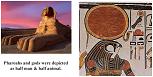
Gods, kings, and calendars were metaphors found in
Egyptian mythology. Cart Item Gn5A6VT includes
Video 6 download .mp4, 22 mb and transcript PDF
download 481 kb
from Paypal-Payloadz eStore for Only $ 1.98 |
V-22 mb T-481 kb 1.98 |
| Understand Genesis 5 Ages
1 Script |
Understand Genesis 5 Ages 2
Script |
Understand Genesis 5 Ages 3
Script |
| Understand
Genesis 5 Ages 4 Script |
Understand
Genesis 5 Ages 5 Script |
Understand
Genesis 5 Ages 6 Script |
Earlier Videos Below Highlight Special Subjects.
 |
Get Ancient_LS_Bible_Calendars_and_Supernatural_Video_&_Script
includes Ages_of_Adam slides and clips. Genesis
definitions for Lunar/Solar Time Splits, book
materials, and ISBN introduce the ministry. First
video trial using a presentation format. Cart Item ALSBCSVT includes
Video 6 download .mp4, 32 mb 13:47 and transcript
PDF 481 kb from
Paypal-Payloadz eStore for Only $ 1.98 |
V-32 mb T-481 kb 1.98 |
 |
Get Jewish_19-year_LS_Bible_Calendar_Video_&_Script
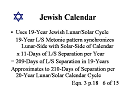
describes basic pattern of the Metonic
cycle. The Jewish calendar distributes 209-days over
19-years by inserting seven extra months. Every 2 or 3
years the extra month, Second Adar usually alternates
29 or 30-days. Seven months reinforce sacred
seven-day-weeks. Adding one day transitions to Mayan
and similar lunar/solar calendars. Cart Item J19YLSBCVT
includes Jewish_19-year_LS_Bible_Calendar.mp4
Video download 22 mb 8:00
and transcript PDF 336 kb from Paypal-Payloadz eStore for Only $ 1.98 |
V-22 mb T-336 kb 1.98 |
 |
Get Mayan_Calendar_Katun_20-year_Time_Split_Tool
Video_&_Script Mayan
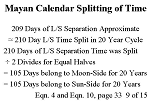
Calendar 20-year Katun Time Split with 105-day Lunar
Side and 105-day Solar Side shows how 210-days l/s
separation time divide for equal halves of 105-days
each. God is "coming between" daylight and darkness,
or between lunar and solar sides of the calendar.
Analogy for 360-day road changes from 209-days in
19-years to 210-days per 20-years. Mayan practice of
counting 20-year l/s cycles increments separate units.
Ministry_Affiliates
make 12.5% per sale. Cart Item MCK20YTSVT
includes Mayan_Calendar_Katun_20-year_Time_Split_Tool.mp4
Video download 20 mb 7:49 and transcript PDF 337 kb from Paypal-Payloadz eStore for Only $ 1.98 |
V-20 mb T-337 kb 1.98 |
 |
Mayan_Dual_Tzolken_Sacred_and_Tun_Civil_Years
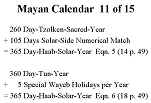
Tzolken 260-day sacred years and Tun 360-day
midpoint length of years are integral to the 52-year
Calendar Round. Last 5-days form the Wayeb
holiday terminal for every 365-day solar year.
Explains Mayan 20-year Katun lunar/solar cycle and
the squared term, 400-year Baktun l/s cycle. Script
is for assembled video. Affiliates
get a quarter for each Video_&_Script
package sold.
Cart Item MDTSTCYVT includes
Mayan Dual Years video download .mp4, 11.4 mb
and
transcript PDF download 239 kb from Paypal-Payloadz eStore for Only $ 1.98 |
 V-11.4 mb T-239 kb 1.98 |
Powerpoint Presentation http://timeemits.com/Video/Ages_of_Adam_Presentation.ppt Contact
Clark Nelson is webauthor for the Ages_of_Adam and Holy_of_Holies ministries. Some still images are used in videos.
Are you a pastor, educator or a student of the Holy Bible? Timeemits seeks anointed people to review and contribute to the Ages_of_Adam ministry. Ancient lunar/solar calendars like the Jewish and Mayan calendars provide the background to understanding early time. Ancient calendars of the Holy Bible use differences between the moon and sun, numerical matching and a 364-day calendar year to describe X-number of days that match with X-number of years. Ages_of_Adam is a free read at timeemits.
tags Antediluvian, First, Calendar, timeemits, Bible, Jewish, Mayan, Genesis, lunar, solar, Old Testament, Seth, Creation, begat, Venus
Clark Nelson is webmaster for http://timeemits.com/Get_More_Time.htm, author of Ages_of_Adam and sequel, Holy_of_Holies. Timeemits and Clark Nelson original web content products are protected media. Revised Copyright 2014 All Rights Reserved. URL http://timeemits.com/Video/videoslide1-12.htm